Modern buildings have become smarter and more interactive. Digitalization is widely used by the organizations such as hotels, hospitals, and housing complexes in order to make their buildings more convenient to use and easy to manage.
Nonetheless, the installation of the smart devices does not always ensure the convenience of their usage. In case the systems of air conditioning, access control, lighting, etc., work separately from one another, their control may be difficult as it requires switching between different software applications, control panels, and so on.
For businesses exploring intelligent building solutions, working with a Smart Home Automation Company in Chennai can help transform separate technologies into a coordinated digital environment. Similarly, customized Hotel Automation in Chennai solutions can support hospitality businesses looking to improve operational convenience and guest experiences.
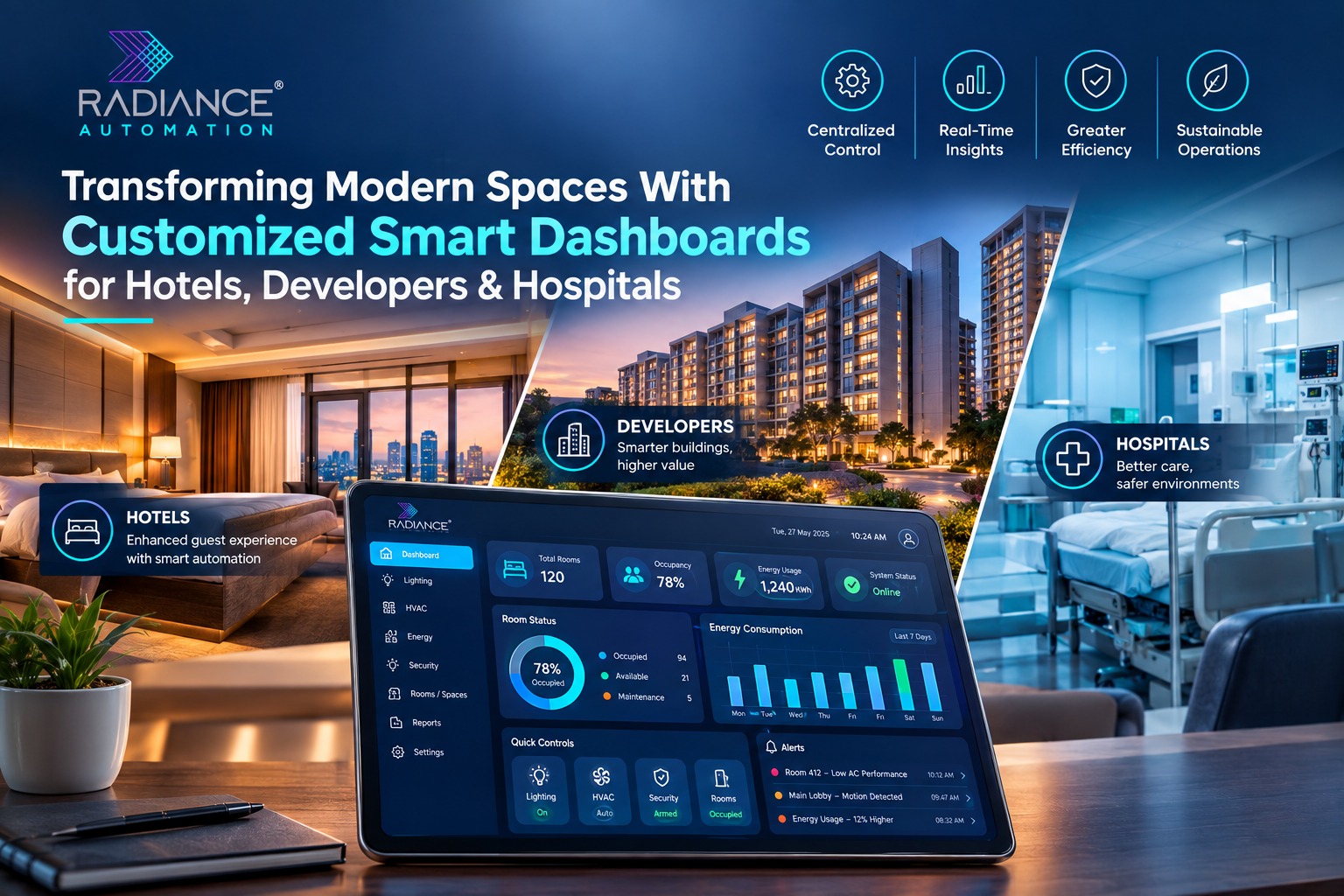
Understanding the Technology Behind Smart DashboardsAn intelligent dashboard is a digital interface in which all compatible systems that are connected are shown and controlled. Depending on how it is installed, it may be available through either a wall-mounted touchscreen, computer, tablet, or any other authorized mobile device.
Whereas regular control panels are intended for single use cases, customized dashboards can integrate various building systems together.
For instance, an administrator of a building may choose to have a dashboard that shows lighting status, energy consumption records, and controls of any access control systems. An administrator of a hotel will have another interface for room and common area controls.
Why Customized Dashboards Matter in Modern InfrastructureEach property is unique in its operation. A hotel will have guest rooms, lobby areas, kitchens, and needs for housekeeping. A residential complex will have common areas, security processes, and maintenance procedures. Specialized operations and security access in hospitals also differ from those found in other types of buildings.
With customization, an organization can arrange its information based on the functions of the personnel that are using the system. The organization can group related controls, hide irrelevant options, and simplify processes that are regularly done.
For developers and managers, customization opens up possibilities for planning their automation system in the context of how the building operates rather than just having smart devices.
Customized Smart Dashboards for HotelsHospitality businesses operate in an environment where guest satisfaction and efficient service delivery are closely connected. Staff members must coordinate room readiness, guest requests, common-area facilities, maintenance activities, and numerous daily operations.
Smart dashboards can provide a centralized interface for selected automation functions, helping hotel teams manage compatible systems more conveniently.
Personalized Room Controls for Guest ComfortToday’s hotels are making use of automated rooms in order to increase the level of guest control over the environment. It will be possible to control such factors as lighting, curtain operation, or air conditioning based on the type of equipment that is installed.
As opposed to using various individual buttons, guests will be able to use some of the available functions via an organized interface.
Various control options can also be configured depending on the category of a room. For instance, the automation level in a suite can be higher than in a regular room.
Supporting Front Desk and Housekeeping CoordinationHotel operations involve several departments working together. Front desk employees need information about room readiness, while housekeeping teams must coordinate cleaning and maintenance activities.
When the hotel's property management system and automation infrastructure support integration, relevant room-status information may be displayed through a centralized operational interface.
For example, authorized staff could access information about selected room functions or service-related statuses without navigating multiple disconnected applications.
Managing Common-Area FacilitiesHotels contain numerous shared spaces, including lobbies, conference rooms, restaurants, corridors, and recreational facilities.
Customized dashboards can help authorized personnel operate compatible lighting, climate-control, and other connected equipment across these areas.
A meeting room, for instance, may have different lighting and climate requirements depending on whether it is being prepared for an event or is currently unoccupied.
Hotel Automation in Chennai: Creating Connected Guest ExperiencesChennai's hospitality sector serves business travellers, tourists, event attendees, and people visiting the city for professional purposes. Hotels must accommodate different expectations while maintaining consistent service standards.
Through Hotel Automation in Chennai, hospitality businesses can explore connected room controls, centralized lighting management, and other compatible technologies suited to their properties. Customized dashboards bring these functions into an organized interface that supports the hotel's operational workflow.
Integrating Smart Features Into Residential ProjectsHomebuyers increasingly encounter residential projects featuring smart lighting, digital access, climate controls, and connected appliances. For developers, the challenge is to ensure these technologies work together in a way that is easy for residents to understand.
A customized dashboard can organize compatible functions according to room, apartment, or building zone. Residents may receive access to selected household controls, while facility management teams use a separate interface for shared infrastructure.
Supporting Building MaintenanceMaintenance teams need reliable information to identify operational issues and coordinate repairs. Where compatible monitoring systems are installed, dashboards may display equipment status, alerts, or other relevant information.
For instance, a facility manager could review available information about a connected lighting circuit or an automated common-area system. Such visibility can support maintenance planning, although it does not eliminate the need for physical inspections or qualified technical assistance.
Supporting Access ManagementHospitals often contain areas with different access requirements, including administrative offices, restricted departments, and equipment rooms.
A dashboard connected to a compatible access-control system may allow authorized administrators to manage selected permissions or review relevant access information.
However, access management must follow the hospital's security policies and applicable requirements. A dashboard should not provide unrestricted access to sensitive areas or confidential information.
The Importance of System IntegrationA customized dashboard can only communicate effectively with systems that support the required integration.
Buildings may contain equipment from different manufacturers, communication protocols, and generations of technology. Some devices offer open integration options, while others require dedicated gateways or proprietary interfaces.
Before implementation, the integration team should identify which systems can communicate, what information can be exchanged, and which controls are supported.
A professional Smart Home Automation Company in Chennai can evaluate the existing infrastructure, recommend suitable components, and plan the integration according to the building's technical requirements.
ConclusionCustomized smart dashboards are changing how modern buildings organize and manage connected technologies. By bringing compatible functions into a centralized interface, they can simplify selected operations, improve access to relevant information, and create more convenient experiences for authorized users.
Hotels can use these interfaces to coordinate guest-room and common-area controls. Property developers can incorporate connected features into residential and commercial projects, while hospital facility teams can use suitable dashboards to manage selected non-clinical building systems.
The success of these solutions depends on thoughtful customization, reliable integration, appropriate security, and a clear understanding of how each building operates.
For organizations considering Hotel Automation in Chennai or broader connected-building solutions, partnering with a capable Smart Home Automation Company in Chennai can help turn separate technologies into a coordinated automation environment.
```