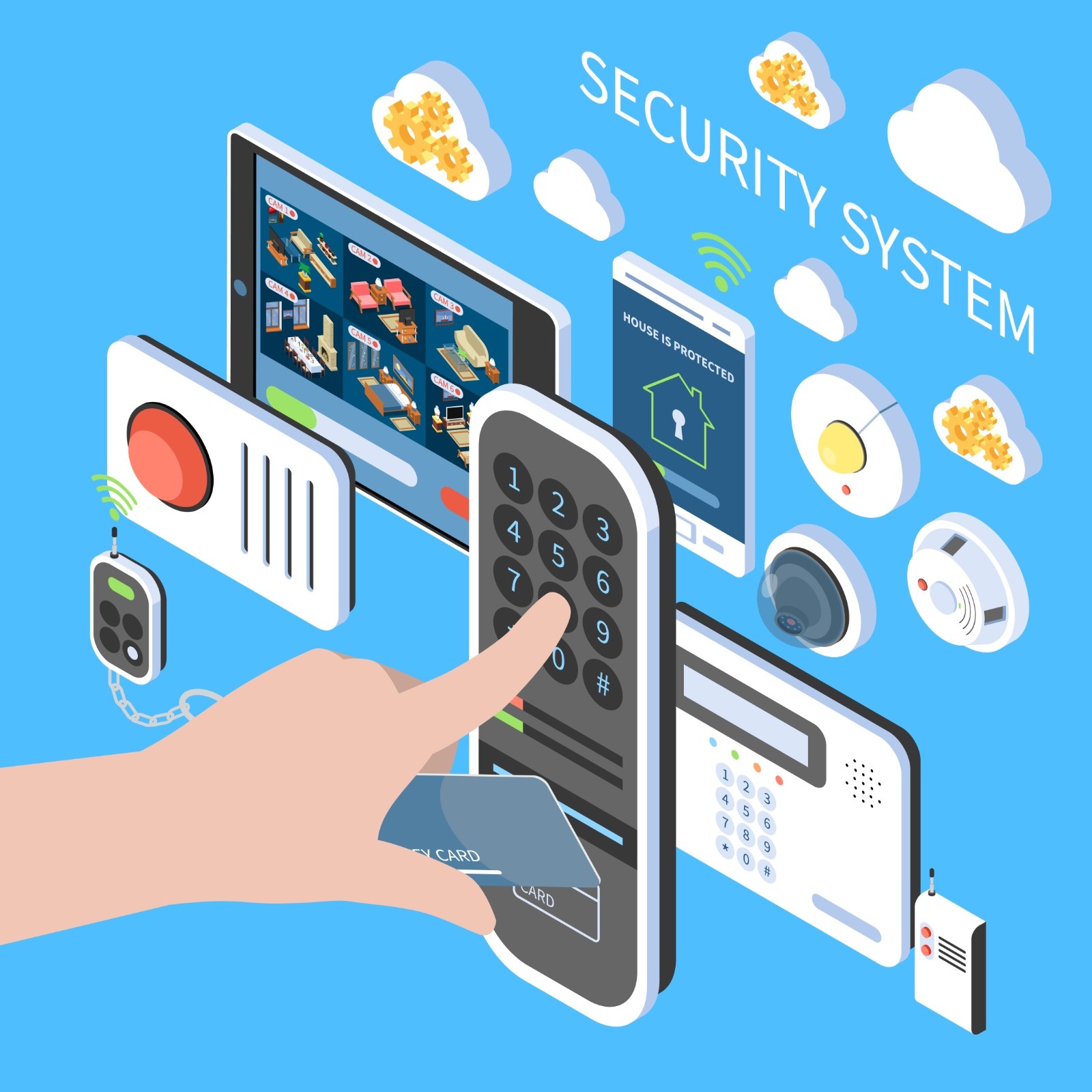
Home security was pretty much based on one thing for most of its existence: it was to sound an alarm or alert when a burglary had taken place.The basics of home security has always been listening for noise or alert when the burglary has happened. Alarms went off and homeowners watched on cameras as they came back from holiday to see what they could not stop. This model has not only been enhanced, but it has been completely overhauled. The present day Smart Home Automation Company, Chennai, is creating security environments that not only predict, detect and react to an incident, but also proactively prevent it from happening, transforming security into a proactive and intelligent defense mechanism.
How Artificial Intelligence Has Transformed SurveillanceAll the time, the traditional CCTV system was captured but did not understand anything. If anything had gone wrong all these would be stored on terabytes of data on a storage drive and no one would have seen these recordings. In a Smart Home Automation Company in Chennai, AI-based Surveillance is a paradigm shift that involves the camera interpreting what it sees, instead of just capturing it.
Smart AI surveillance cameras can tell the difference between human bodies, vehicles, animals, and shadows and any other non-important movement. This discrimination alone means that the old motion triggered systems were virtually useless in the real world due to false alarms. Add to these more sophisticated capabilities, such as perimeter line crossing detection, which alerts only when a perimeter line is crossed; loitering detection, which raises an alarm when a person stays stationary near an entry point beyond a set time limit; and object removal detection, which lets users know if a possession was removed from a monitored area.
Access Control That Replaces Physical Keys EntirelyMost households are now accustomed to the physical key as a security liability and its weaknesses are accepted as "okay". Keys are duplicated, lost, stolen, and given to service personnel and cannot be monitored, controlled or revoked later. A Home Automation Company in Chennai with the implementation of this infrastructure, can provide security upgrades which no locksmithing can offer!
Biometric access – fingerprint, face and now more and more iris – offers a true sense of unique individual authentication that is not shareable, duplicatable or forgettable with the authorised individual. Smart locks, powered by encrypted digital credentials, let homeowners enable a specific time window of access to cleaners, technicians or delivery workers for a specific purpose, via a smartphone app, and record every access and exit with a time stamp and the identity of the individual.
The capability to track when and who was in which part of the house is two-in-one for households that have domestic staff, elderly people or young children. Access permissions that expire automatically – a housekeeper credential that only allows access between certain hours of the day and certain days of the week, for example, or a contractor who only gets access for as long as a job requires it – remove the ongoing access vulnerability that never went away after the access was no longer needed.
Remote Monitoring: Your Property Under Observation From Anywhere on EarthThe past required that in order to be near, you had to be vulnerable, that is, away from home where you were unaware and uninfluenced. This vulnerability has been completely eliminated with the installation of Remote monitoring features in the modern Smart Home Automation Company in Chennai system. A homeowner travelling abroad is as aware of what is happening in his or her Chennai home as if he or she is sitting in the adjacent room.When a home owner travels overseas, he or she has the same situational awareness of what is happening in his or her home in Chennai as if he or she was sitting in the adjacent room.
Combined, these live feeds, motion-activated push notifications and video clips, two-way audio communication using smart doorbells and outdoor cameras, and remote lock and unlock features make for a thorough, yet easy-to-manage monitoring experience. Importantly, these are not passive viewing devices, but they are interactive interfaces which enable immediate responses.
The homeowner in another town receives an alert when the camera sees something it doesn't know at the entry point, then he can see the live feed, turn on the exterior lights remotely and use the camera's speaker to make a threatening sound to ward off potential intruders all in a few seconds. This "responsiveness" has a significant deterrent effect which is well documented.
Cybersecurity: The Vulnerability That Physical Locks Cannot AddressAll the security devices in a smart home are potential "doors" — if they are connected to the internet, they're a way in for the bad guys. With the increasing sophistication and increased connectivity in Home Automation Company installations, Cyber security has become a key focus point of the design in every responsible security system installation.
The main architectural line of defence is: Segmentation – all smart home devices (cameras, smart locks, etc.) are placed on a separate network from the home network that also serves computers and sensitive personal information. If the home network is properly segmented, a compromise of a connected camera shouldn't be a way to access banking information and personal files stored in another part of the network.
The discipline of the firmware is also important. As devices are manufactured, their firmware is updated to address vulnerabilities that are discovered, and systems that are not updated to their latest firmware are at risk over time. It's for this reason that Radiance Automation's service contracts feature regular cycles of audit and update of the device's firmware.
What the Near Future of Residential Security Looks LikeThe path of intelligent security systems is towards a feature-set that's already being showcased in the top Smart Home Automation Company in Chennai and eventually will be standard in the near future. AI systems that learn the typical patterns of a household and recognize only deviations, or "behavioural analytics," mark the next significant step in AI-based surveillance.
These systems, such as a system that uses drones to patrol a perimeter of a larger property in response to an alert, one that automatically moves a monitoring system to a location of concern based on the alert or one that detects facial expression and voice patterns of distress and alerts for it, are moving from research to commercial use.