The significance of lighting cannot be undermined at any cost, as it has been an integral part of interior décor since long. But nowadays, lighting is no longer restricted to a simple mechanism that is activated in case there is darkness in the room or switched off when no one is inside it.
This is where Lighting Automation in Chennai is creating new possibilities for residential and commercial spaces. Instead of treating every light as an independent fixture, an automated system can coordinate multiple lights and create an environment that responds intelligently to everyday situations.
From Individual Switches to Connected Lighting ExperiencesThe process for traditional lights normally involves an individual making all the decisions. One enters the room, locates the switch, and then chooses the needed light. However, the process of smart lights involves various fixtures communicating with each other using the control center.
Through Lighting Automation in Chennai, homeowners and businesses can manage brightness, fixture groups and lighting behaviour according to specific requirements. A single command can adjust several lights together rather than requiring multiple manual actions.
The objective is not simply to reduce the number of switches. It is to create lighting that works more naturally with the way people use a space.
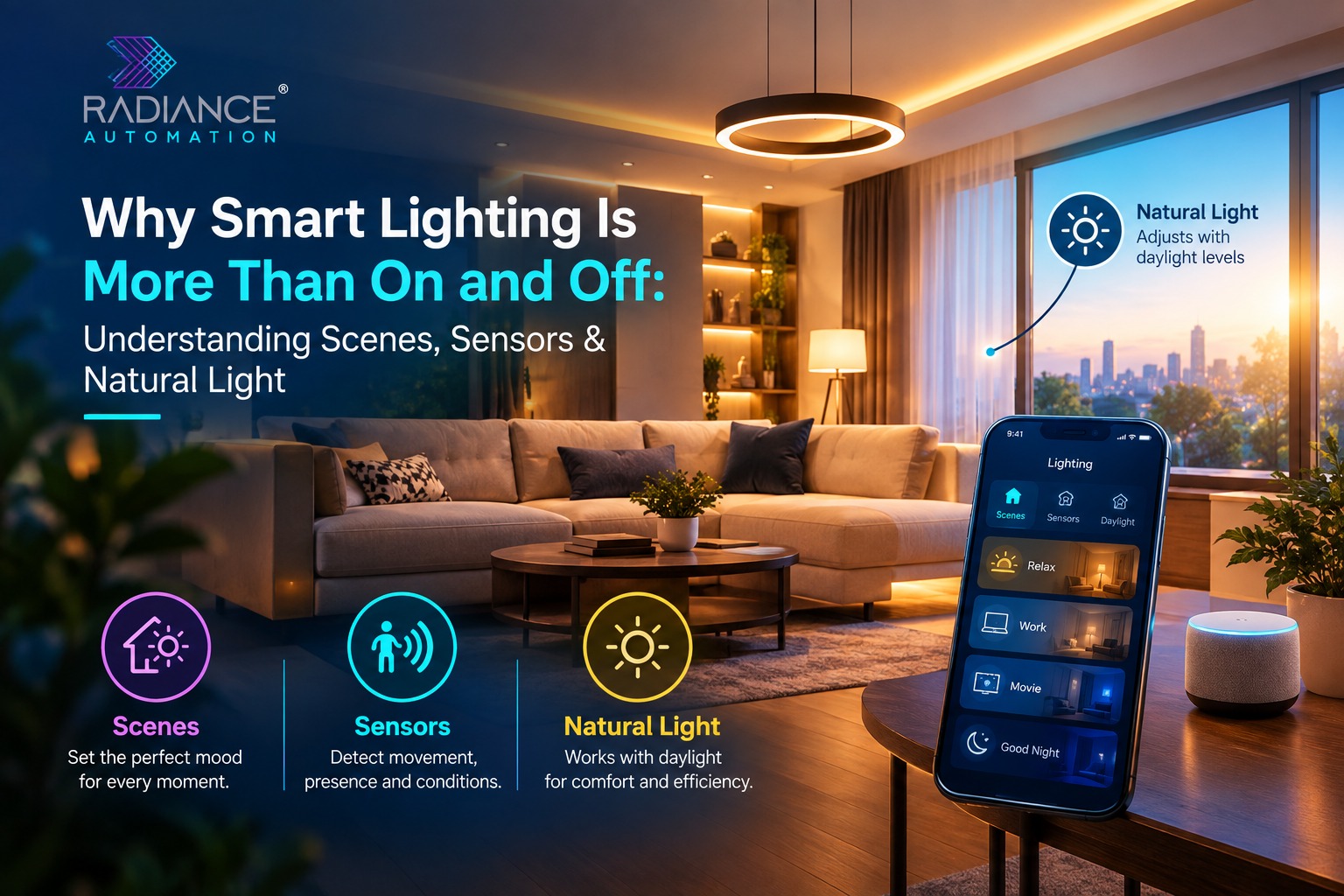
What Is a Lighting Scene?Among the many benefits that can be gained from automated lighting is scene-making. A scene refers to the combination of a number of lighting settings under one command.
As an illustration, the living room may have a bright setting if you want to read, a soft setting if you want to relax, and another for entertainment. The settings control a number of fixtures at once.
With Lighting Automation in Chennai, these scenes can be activated through wall controls, mobile interfaces, voice commands or programmed schedules. This makes lighting more adaptable without requiring users to adjust every fixture individually.
A well-designed scene also helps maintain consistency. Instead of manually recreating the same lighting arrangement every evening, users can activate their preferred setting with one command.
Sensors That Make Lighting ResponsiveSmart lighting is greatly enhanced by incorporating sensors into the setup. Occupancy sensors and motion sensors can sense any activities in the environment and help lighting work in an automated manner.
For example, the light in the hallway would turn on automatically whenever there is anyone walking around in it, and switch off if nobody is there. The light in the workspace could be operated according to occupancy.
A professional Lighting Control Automation Company Chennai can determine where sensors would provide genuine value based on room usage, movement patterns and lighting requirements.
Sensor-based control can also support more efficient operation. Lights do not have to remain at the same intensity simply because they were switched on earlier.
Working With Natural DaylightThe presence of natural light is yet another aspect of intelligent lighting that needs to be considered. While one might need an intense amount of artificial lighting during the early hours of the day, the same amount of light would not be required once there is natural light entering through the windows. In fact, an intelligent lighting system can be designed around natural light as well.
This approach makes Lighting Automation in Chennai more dynamic. Instead of following a fixed lighting schedule throughout the day, the system can respond to the actual environment.
For offices, hotels, residences and other large spaces, daylight-responsive lighting can also create a more comfortable atmosphere while avoiding unnecessary artificial illumination.
Lighting That Adapts to Different ActivitiesOne room might have multiple uses in one day. A dining space may be used for eating, work, conversation or relaxing. Having the same light level for each purpose may not be the best way. Through automation, multiple setups are made depending on the occasion. The right scene is then chosen.
A capable Lighting Control Automation Company Chennai can integrate these requirements into the overall lighting design rather than treating automation as an additional feature added after installation.
Why Professional Planning MattersSmart lighting extends far beyond buying smart bulbs or installing any sensors. The smart lighting system must be designed based on the existing electrical wiring, type of light fittings, room layouts, and control needs.
Professional lighting automation design for Chennai starts from knowing the usage pattern of various areas. After that, proper controls, sensors, scenes, and automation rules can be chosen.
This becomes highly relevant when designing smart lighting solutions for large properties with a number of lighting zones that should work separately within the same system.
Creating a More Intelligent Lighting EnvironmentWhat is actually meant by smart lighting is not the difference between ON and OFF but what happens in between. There can be the changing of scene, there can be occupancy sensing and there can even be the sensing of natural light affecting artificial lighting. All these features can make the lighting system interactive and more in tune with both the surroundings as well as its users.
Therefore for any one planning for Lighting Automation Chennai the emphasis should not be on replacing conventional lighting switches but on creating an intelligent lighting system. This is possible with proper planning and technology. A good Lighting Control Automation Company Chennai can be of immense help.